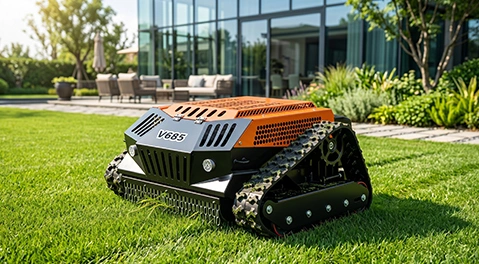




The Robotic Lawn Mower: Redefining Modern Yard Maintenance with Intelligent Technology
In an era where smart homes and green living are deeply integrated, the robotic lawn mower is quietly revolutionizing traditional yard maintenance through its groundbreaking automation capabilities. It is no longer merely a tool that replaces manual labor but an intelligent gardening partner integrating environmental perception, path planning, and autonomous decision-making.
1. How Do the Core Technologies Work?
Modern robotic lawn mowers typically incorporate multiple cutting-edge technologies:
Boundary Sensing and Navigation Systems: Using buried boundary wires, GPS signals, or visual/radar sensors to create digital maps of the yard for precise positioning and obstacle avoidance.
Intelligent Path Planning Algorithms: Employing advanced algorithms (such as SLAM – Simultaneous Localization and Mapping) to achieve efficient, comprehensive "zigzag" or spiral mowing patterns, avoiding overlap and missed spots.
Adaptive Cutting and Safety Modules: Equipped with rain and humidity sensors to automatically return to the charging station during rain; ultrasonic or contact sensors immediately stop the blades when encountering pets or children, ensuring safety.
2. Core Value Beyond "Automation"
Ultimate Convenience: Users simply set mowing schedules and frequency via a smartphone app, and the machine can automatically return to recharge and operate year-round, completely freeing up time and effort.
Eco-Friendly Operation: Utilizing the "mulching" mode, finely chopped grass clippings are returned to the soil as natural fertilizer, reducing the need for chemical fertilizers and promoting healthier turf growth.
Quiet and Low Energy Consumption: Fully electric-powered, operating at noise levels far lower than gasoline mowers, allowing for quiet early morning or nighttime mowing without disturbing neighbors.
Smart Connectivity: Can integrate into smart home ecosystems, synchronizing with automated irrigation and lighting systems for fully automated yard management.
3. Expanding Applications Across Scenarios
Beyond private villas and gardens, robotic mowers are now widely used in:
Public Green Spaces and Municipal Parks: Reducing long-term labor costs while enabling refined maintenance.
Golf Courses and Soccer Fields: Ensuring optimal grass height consistently, enhancing the quality of professional venues.
Corporate and Campus Landscaping: Achieving standardized, unmanned landscape maintenance, reflecting a modern technological image.
4. Key Considerations for Selection and Use
Yard Complexity: Yards with numerous obstacles or slopes require models with stronger navigation and power.
Battery and Runtime: Match battery life to lawn size, ensuring automatic recharging capability.
Safety Certifications: Verify products comply with international safety standards (e.g., CE, UL), especially for households with children or pets.
Data Privacy: Understand the device’s data collection and cloud transmission policies, opting for trustworthy brands.
Conclusion
The robotic lawn mower represents a leap from "tool automation" to "scenario intelligence." It is not only a vivid example of technology empowering daily life but also an intelligent bridge fostering harmony between humans and nature. With the ongoing integration of 5G and AI technologies, future yards may be silently tended by tireless "digital gardeners," making green living truly effortless, elegant, and sustainable.
Previous:Wood Chipper: A Powerful Assistant in Garden Management
Next:No